


Award-winning singer-songwriter and Te Taumata o Apanui leader Rob Ruha has sparked a conversation about kapa haka group sizes, following changes to the rangatahi competition.
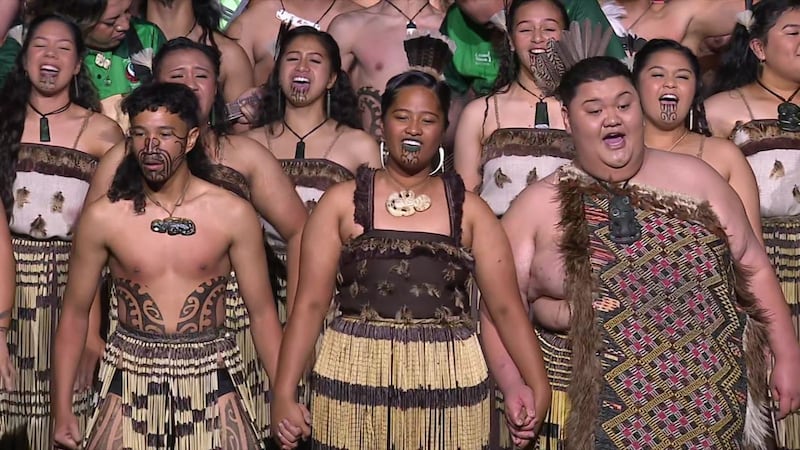
Traditionally, kapa competing at Te Matatini have been limited to 40 kaihaka. But that rule was changed for Ngā Kapa Haka Kura Tuarua o Aotearoa in Tauranga in July, with the maximum increased to 50.
Ruha says the change prompted him to ask whether senior groups should follow suit.
“I whakahiwa mai, whakawairua mai au e ngā rangatahi kua tīni hoki rātou mai i te 40 te nama o runga ki te 50.”
He says allowing more performers would bring greater numbers on stage.
“Ko te painga nui ka taea te noho, te hari atu i te tokomaha ki runga i te atamira,” Ruha adds.

Hei painga mā te katoa
He says one of the biggest challenges in competitive kapa haka is telling kaihaka they will not take the stage.
“Mehemea nui ake ō mema i te 40, he wehewehe whānau tēnei mahi,”
“Kua rua tekau tau awahau i roto i Te Kapa Haka o Te Whānau a Apanui - ināianei i roto i Te Taumata o Apanui. Ia Matatini, ia Matatini, ka wehewehe whānau.”
Ruha believes increasing the maximum number would help alleviate some of the pressure on tutors and kaihaka.
A widely held belief is that the number 40 was originally established because only 40 people could fit on a bus at one time.
“Ko te kōrero a Koro Trev Maxwell i te tīmatanga, i te tau [1972], 38 kē [ngā kaihaka], nō te mea koinā te whārahi o te pahi o taua wā rā.”

Ngā māharahara
Ruha says one of the main concerns about a potential rule change is that kapa unable to field 50 kaihaka could be placed at a disadvantage.
Currently, the maximum number of kaihaka onstage is 40, with a minimum of 24. Ruha says the kura tuarua competition showed that performance quality is not necessarily determined by the number of kaihaka onstage.
“Toru tekau mā waru noa iho ngā kaihaka i roto i te tīma o [Te Wharekura o] Māngere - i tuarua rātou. Nā reira he wero nui ki ō tātou kapa haka kia kaha tonu.”
Stage dimensions and cost are also factors being considered.
“He nui ake i te inenga atamira o te Koroneihana. Ā, i tērā atu tau, [Te] Whānau a Apanui, 150 tāngata i runga i te atamira kotahi.”
Ruha says cost has always been a major consideration for kapa.
“I ngā tau katoa, ahakoa 40, ahakoa aha tekau, he taumahatanga kei konā.”
Ngā ture hou
One rule change for secondary school kapa in July was moving performances later in the day.
“Ko wai te pōrangi pīrangi ana te oho mai i te ono karaka i te ata kia kaha rā te hāparangi o ngā reo i te waru karaka i te ata?”
He says this benefits kaihaka and spectators alike.
“I neke rātou ki ngā tāima pai e ora ai te korokoro ki te waiata. He whakaaro nui tērā mā te Matatini.”

Te whakatau a Te Matatini
Te Ao Māori News approached Te Matatini to ask whether there was any possibility of increasing the maximum number of kaihaka for Te Matatini o Ngā Taniwha.
In a statement, Tā Selwyn Parata, Chairman of Te Matatini, said:
“The current rules are clear: a kapa consists of up to 40 kaihaka, and those rules remain in place.”
“As with any aspect of the competition, if there is strong interest from rōpū and rohe during the post-festival review, the matter can be discussed through the established Te Matatini review process.”
For Ruha, regardless of the outcome, the conversation is one that whānau should continue to have.
“Kia kaha tonu Te Matatini, kia kaha tonu ngā rohe ki te tautoko i a tātou kapa haka e mahi nei i te mahi nui kia rongonui ai te Māoritanga me te kapa haka i runga i te atamira,” he says.
“Mehemea ka taea ā tātou rangatahi, ka taea ngā pakeke.”