

Around 50 pēpi across Aotearoa die each year from SUDI – sudden unexpected death in infancy – with Māori babies five times more likely to be affected. In response, a new safe sleep approach centred on whānau needs and mātauranga Māori has been created to improve safety and awareness.
Fay Selby-Law, who is leading Hāpai Te Hauora’s Foundations for Safe Sleep, says SUDI deaths have surged over the past decade.
“I think those pēpē who have passed because of SUDI, they never reach that potential,” she says.
“It’s about practical care without fear or judgment. We want parents and caregivers to feel supported and confident, not shamed.”
Waiho mā te whānau tonu e ārahi
For more than a decade, the P.E.P.E. framework has guided safe sleep practices, but whānau told Hāpai Te Hauora it often felt clinical and disconnected from everyday life.
In response, Hāpai held wānanga with whānau in Te Tai Tokerau, Tāmaki Makaurau, Tauranga and Tūranga Nui-ā-Kiwa to create a culturally grounded framework.
The new approach is built on four pillars: Face Up Face Clear, Flat & Firm, Free From Harm and Partner & Family Support.
Selby-Law says whakapapa sits at the centre.
“We wanted to include all the whakapapa of a pēpi. It was important to include fathers, and that was something that was missed in the previous messaging,” she adds.
“Fathers in their rōpū talked about particularly when they were a first-time father, about not knowing what their role is.”
Te aroha o te pāpā ki ōna tamariki
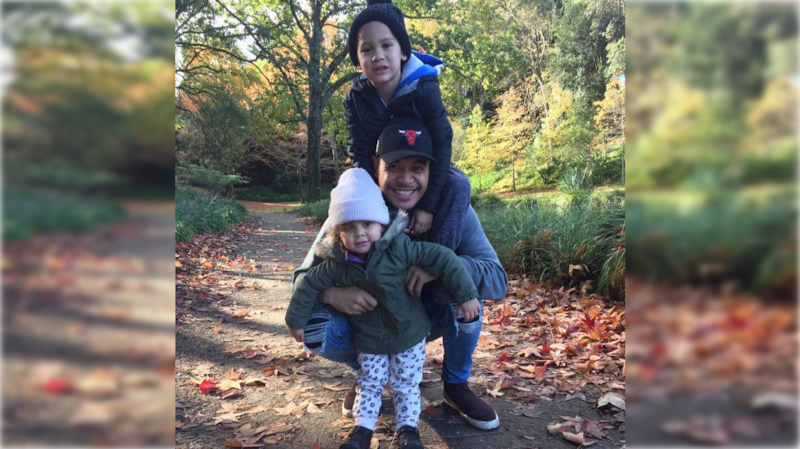
Pāpā of four Jesse Iro (Ngāpuhi) shared his story at the framework’s launch in Tāmaki Makaurau this month.
“Our oldest child he was born premature, and straight from birth, he was put into an incubator - the only way I was able to touch him was through the little holes in the side of the incubator,” he says.
“That also helped inspire me to be, not, be a better father, but just better ways or that I can help keep him safe.”
Despite becoming a parent, Iro says he had little understanding of safe sleeping.
“I grew up without a father figure or without my pāpā around. [Now] with me being a pāpā of four, I’m actively involved in all of their lives.”
He says some of his own habits increased risk for his pēpi.
“For my two youngest children, I kinda bought them into my bed, and I always slept with them, [and] I found that was a big risk factor for them,” he says.
“At the time I was a heavy smoker, and so heavy smoker and bed sharing were two of the big causes, two big risk factors for pēpi.”
Kia piritata, kia haumaru
While bed-sharing is often frowned upon due to its risks for pēpi, Selby-Law says it is a natural human instinct that requires clear, practical guidance.
“Bed-sharing can be a practice - both of cultural practice but a practice within whānau - and again, [parents] didn’t wanna be told off for doing something that was normal for them. So how do we best explain that in the safest possible way?”
“In our information, we share when it absolutely is unsafe to bed share.”
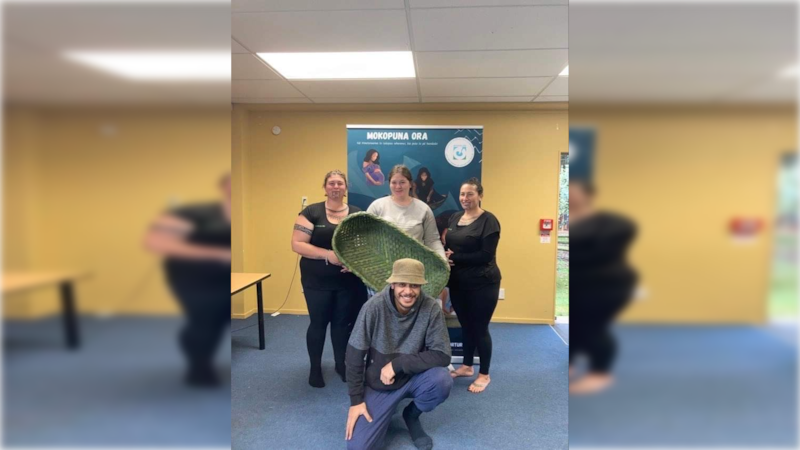
After working at Mokopuna Ora, Iro became a kairaranga and learned the importance of collective care.
“[For] Māori and Pacific Island, it takes a village to raise our child and [making] a wahakura, there’s a lot that actually goes into it.”
He says a wahakura allows pēpi to sleep close to whānau while reducing the risk of rolling on them.
“When the wahakura is finally made our pēpi will feel everyone that was a part of it.”
Ngā mōrearea
While the exact cause of SUDI is not always clear, Selby-Law says there are clear risk factors.
“Things that [health providers] can’t control like poverty and housing,” she says.
“Smoking in pregnancy - [that’s] an increase by six times, and if a māmā and whānau smoke during pregnancy and choose to bed share, the risk increases by two times.”
SUDI occurs between four weeks and 12 months of age, with the highest risk in the first four months.
“When you’ve been smoking, drugging, drinking or when you’re extremely tired - those would be the times that you would need to make another [safe sleep] plan.”
Me wātea ngā wāhi moe
Selby-Law encourages whānau to keep pēpi sleep spaces simple and free from extra items.
“Because kui [has] given a lovely soft toy to baby, actually, [they don’t] know that soft toy and doesn’t know that it was kui who gave it to them, and so they don’t need it in the bed - it’s a risk.”
“Anything that can [interfere with] the airway is a risk for sleeping with pēpi.”
She hopes the message reaches beyond the health sector.
“I don’t believe that SUDI is limited to the health sector. It should be brought up should be across education, justice - everywhere.”
“If we believe that it takes a village to raise a child, then everybody in the village needs to know about it.”