

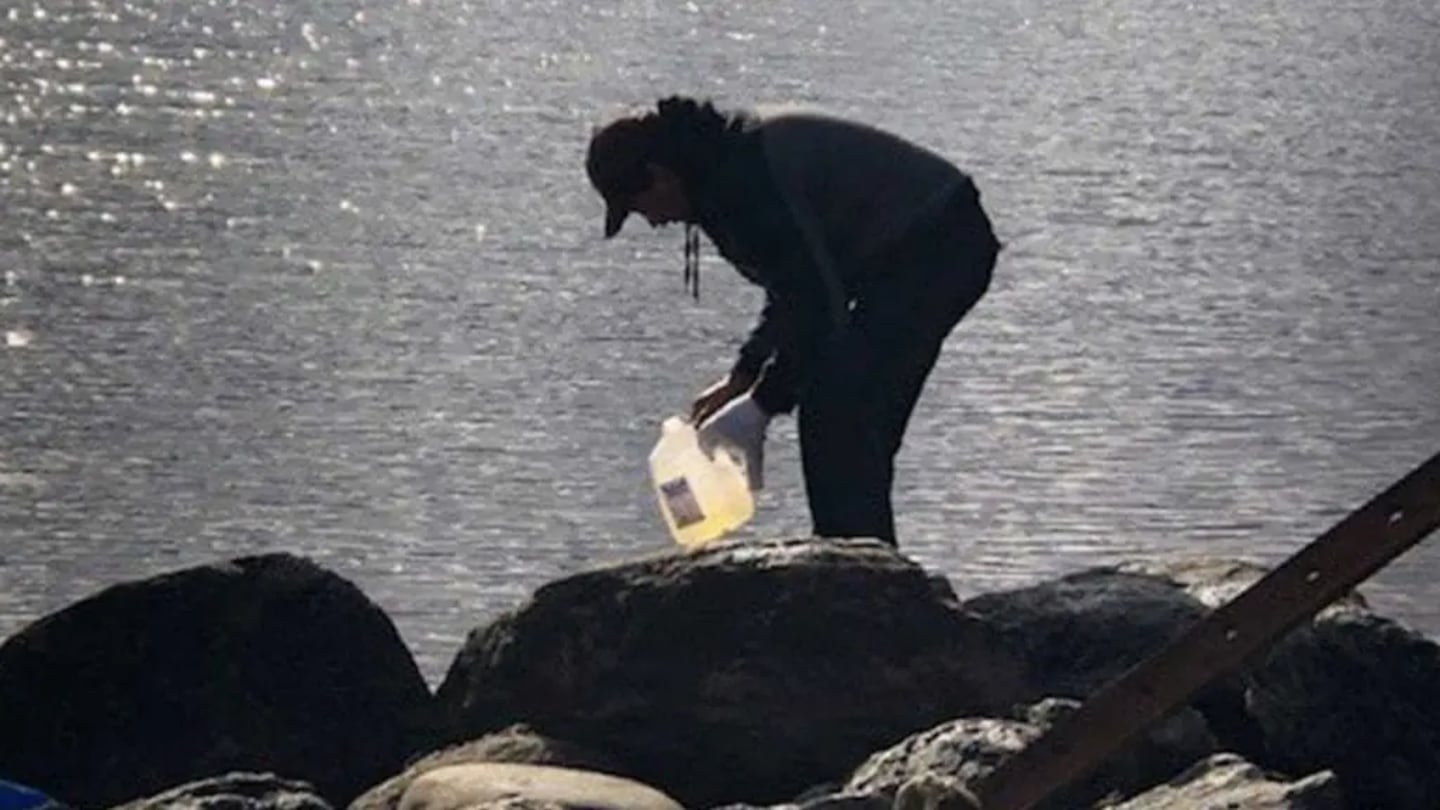
This article was first published on APTN News in Canada.
In a pair of landmark rulings, the Federal Court has confirmed that Canada has a legal obligation to provide both adequate housing and safe drinking water to First Nation peoples living on reserve.
The cases both recognize for the first time that housing and water services are not discretionary government programs, but enforceable obligations grounded in law.
The two class-action lawsuits — one led by Shamattawa First Nation in Manitoba, the other by St. Theresa Point First Nation — argued that decades of chronic underfunding and systemic neglect by Ottawa violated the Charter of Rights and Freedoms, the common-law duty of care, and the Crown’s unique fiduciary obligations to Indigenous peoples.
Justice Paul Favel oversaw both cases.
The First Nation water case
On Dec. 5, in Shamattawa First Nation v. Canada, Favel ruled that Canada breached its legal duties by failing to provide safe water to communities living under long-term drinking water advisories.
The case, involving over 50 First Nations, marks the first time a Canadian court has ruled the government has a legal obligation to ensure water access on reserve.
“This is a historical result that all First Nations can be proud of and can forever change the course for our future generations” said Shamattawa Chief Jordna Hill.
The case heard on Dec. 5 deals with First Nations that remained under long-term drinking-water advisories, and those who entered into new long-term advisories after a lawsuit was settled in 2020.
“We are still waiting on new water legislation more than four years later and many First Nations continue to be under long-term drinking water advisories, and that is unacceptable,” said Chief Doreen Spence of Tataskweyak Cree Nation.
“We cannot live without safe drinking water, and far too many of our people have gotten sick because the water on our reserves continues to be so poor.”
“The federal government argued that safe drinking water on reserve is discretionary and that First Nations do not have enforceable claims. The Federal Court has categorically rejected that view and confirmed that safe drinking water on reserve is a fundamental right rather than an act of charity,” said Michael Rosenberg, legal counsel for the plaintiffs. “It should never have been necessary to bring this case.”
Court heard unsafe water caused serious illnesses
The 60-page decision cited harrowing evidence from Shamattawa, a remote Treaty 5 community under a boil-water advisory since 2018, about how citizens suffered a variety of illnesses due to use of contaminated water.
One five-year-old child developed lesions so severe from bathing in the “treated” on-reserve water that one of his testicles had to be surgically removed.
Families collected creek water by hand in winter, risking falls through the ice.
Federal workers, meanwhile, were flown in bottled water not made available to residents.
“Canada provides its employees working in Shamattawa with bottle [sic] and jugs of water for their personal use. As a result, the lives of Canada’s employees are unaffected by many of the hardships that we are forced to endure, leaving only Shamattawa’s members to bear the consequences,” Chief Hill testified.
“It is hard to think of a more apt symbol of Canada’s neglect than seeing the pallets of water at our airport, and knowing that Canada has flown them in for its employees, but not for us.”
Favel concluded that Canada exercised “discretionary control” over water access and failed to meet even basic standards of care.
“In establishing reserves, First Nations could not live on the land at any point in time without access to drinking water. Accordingly, the Crown was aware and took steps to locate reserves where there was water. Since the establishment of reserves, standards for clean water have changed, along with access and availability,” Favel wrote.
“Changing circumstances compel changes in fiduciary practice. The content of the duty shifts. The duty itself does not.”
The evidence, drawn from over 10,000 pages of documents and testimony, included expert witnesses who described Canada’s role in creating on-reserve dependency, chronic underfunding, and spiritual harms tied to water insecurity.
One expert compared water access on reserves to conditions in refugee camps. Another testified that average water use in some communities was less than 15 litres per person per day — far below the Canadian average of 220 litres.
The ruling comes at a time when the federal government has failed to reintroduce legislation intended to guarantee clean drinking water for First Nations.
A related case will be heard on Wednesday to take the government to task for failing to introduce clean water legislation by Dec. 21, 2022 as promised in an earlier settlement agreement.
Bill C-61, a proposed First Nations Clean Water Act, was introduced in 2023 and was winding its way toward becoming law when Parliament was prorogued on Jan. 6.
Carney told chiefs at the Assembly of First Nations Special Assembly last week that clean water legislation would be introduced in the spring.
Although the Carney government had pledged to reintroduce it this fall, that didn’t happen. Other than the minister saying it was a “busy legislative” period, no reasons have been provided for the delay.
Safe housing is a legal duty, court finds
On Dec. 5, Favel also released a landmark decision on a class-action case on First Nations housing.
The class action was launched in May 2023 by St. Theresa Point and Sandy Lake First Nations, on behalf of themselves and other similarly affected communities.
The case argues that Canada’s failure to provide adequate housing on reserve violates both its fiduciary duties and the charter rights of First Nations people.
Favel certified the class action in 2024, clearing the way for it to proceed in two stages.
The Dec. 5 judgment concludes the first stage in which the court determined that Canada owed a legal duty to the class as a whole.
The government has until early January 2026 to appeal the housing case.
If it doesn’t, the case will move to the next stage, where the court will look at the facts for each First Nation and decide whether Canada failed its legal duties — and what needs to be done to make things right.
The court’s decision followed thousands of pages of evidence and emotional testimony describing life in unsafe, overcrowded, and crumbling homes.
The court heard evidence that many communities have lived with inadequate housing since they were forced onto reserves. Some homes are so overcrowded that people sleep in shifts. Others are infested with mould or pests. Families have resorted to living in tents and shacks. Many homes have no running water or heat.
Favel found that homes on reserve are “poorly constructed” due to “inadequate and inappropriate building materials,” with many homes lacking running water or sewage systems.
Children most affected by poor housing
The court heard that children in these homes are often sick, miss school, and suffer from poor sleep and hygiene. Some are taken into care simply because of the condition of their housing.
In Sandy Lake First Nation, three children — ages nine, six, and four — died in a house fire.
In St. Theresa Point, two 14-year-old girls froze to death in 2023.
“This decision confirms that the federal government put us in an impossible position by creating and perpetuating our infrastructure gap. Now the federal government has to help us rebuild our community. This is not just a moral obligation; it is a legal duty, and we cannot wait any longer for housing,” said Chief Emeritus Elvin Flett of St. Theresa Point.
‘It seems like there is hope for the future’ says St. Theresa Point chief.
The lawsuit was filed by St. Theresa Point and Sandy Lake First Nations on behalf of themselves and other communities.
Both are remote fly-in communities in northern Manitoba and northwestern Ontario, with long-standing housing shortages.
“We did this for First Nations across the country and our future generations, who deserve to live in housing that allows them to be healthy and safe,” Flett said. “We have been forced to live in difficult conditions, and for the first time in a long time it seems like there is hope for the future.”
“We shouldn’t have had to bring this case. We don’t want to spend years in court fighting while our people suffer. In Sandy Lake our households are overcrowded and many of them are unsafe. Our friends and family leave and can’t come home again, because there is nowhere for them to live. It takes a heavy toll on everyone,” said Chief Delores Kakegamic of Sandy Lake.
‘The time for excuses has passed’
Lawyer Michael Rosenberg, who also represented the plaintiffs on the housing case, said the ruling leaves no room for delay.
“The Federal Court could not have been clearer. The time for excuses has passed. The time for action is now. Class members are living at the extreme edge of a unique on-reserve housing crisis in conditions that would shock most Canadians. The court has recognized the federal government’s role in creating these conditions,” said Rosenberg.
“The court has also recognized that class members will only escape these conditions with significant support from the federal government. This problem has been kicked down the road for decades as an infrastructure gap widened into a chasm.”
Judge notes parallels between water and housing cases
In his decision on the Shamattawa First Nation water case, Favel made a note that the two cases -water and housing – revolved around similar issues and historic patterns.
In both, he found that Canada owed a common-law duty of care to the affected First Nations and that key charter rights were engaged by the government’s actions.
He stopped short of deciding whether those rights were breached — that will come in the next phase — but he made clear that the charter applies.
By Karyn Pugliese of APTN News.
