

Te Puni Kōkiri has told MPs that Whānau Ora has never reached its billion-dollar vision because it “couldn’t prove” its success in the form required by Government systems, despite more than a decade of reports showing strong results for whānau.
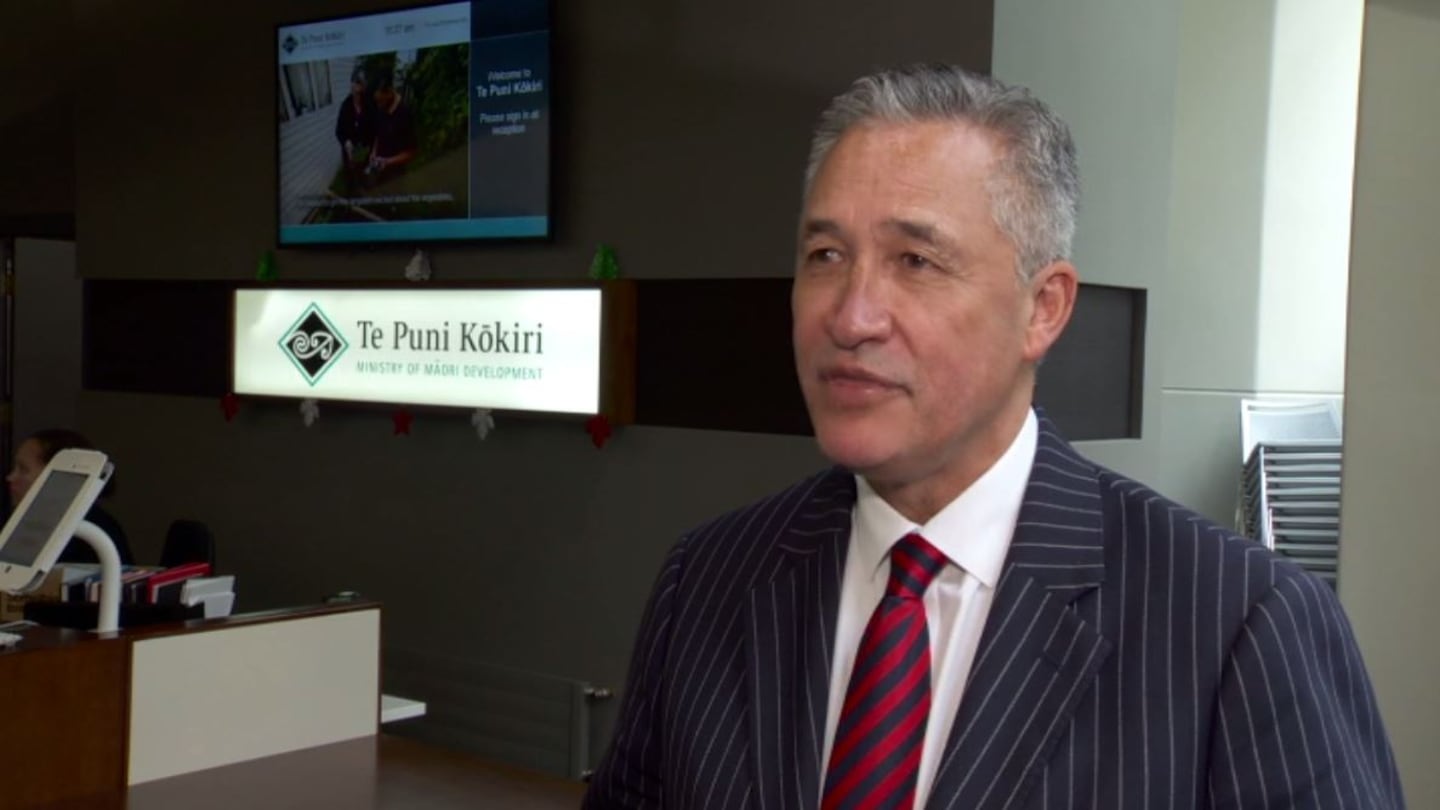
Te Puni Kōkiri chief executive Dave Samuels fronted the Māori Affairs Select Committee this week and said Whānau Ora has been constrained not by a lack of evidence, but by the type of evidence successive governments have demanded.
He said the kaupapa was never funded to the scale imagined by its architect, Dame Tariana Turia, and now sits at just seventy nine million dollars, about 0.2 percent of New Zealand’s total social services spend.
“Why is it not a billion-dollar kaupapa? After 12 years we’re still sitting at seventy nine million dollars,” he told MPs.
Samuels said the core difficulty has been meeting the Government’s strict attribution requirements, which rely on proving, through the Integrated Data Infrastructure, that a particular Whānau Ora investment directly caused a specific measurable outcome.
“The difficulty I’ve always had in the past is I couldn’t prove it from a data perspective. I believe Whānau Ora works, but now we will be able to prove it,” he said.
A system that never fit Whānau Ora
Samuels said Whānau Ora has always collected extensive information about whānau plans, goals, wellbeing and long-term change, but its data has never aligned with the Public Finance Act or the Government’s social investment model.
Whānau Ora providers gather qualitative, relational and whānau-centred information that tracks complex outcomes across health, housing, education, income and whānau dynamics.
Government systems, however, prioritise highly standardised datasets designed for individual outputs and financial attribution.
“Through data, being able to prove that Whānau Ora works is a pathway to achieve that moemoeā of Whaea Tariana,” Samuels said.
He said Whānau Ora information was never plugged into the central data system, meaning even strong evidence could not be used in Treasury or Cabinet processes.
“We have to operate under the Public Finance Act, and what I’m saying is why wouldn’t we want to be able to prove it?” he said.
Labour says the logic “insults” kaimahi
Former Māori Development Minister and Labour MP Willie Jackson rejected the argument that Whānau Ora has lacked proof.
“I don’t buy that. That’s a bureaucratic view, a government view that I don’t think is right. Because if anything has been proven in the last decade or so, it’s that Whānau Ora is an overwhelming success on very limited pūtea,” he said.
He said placing the burden of proof on Māori providers, while mainstream agencies face no such scrutiny, “insults” the kaimahi who have delivered for whānau for more than 15 years.
“It is insulting. We all know how successful the kaimahi are on the ground. But you’ve got a strategy in place with no funding. All targeted Māori funding has disappeared and continues to disappear,” Jackson said.
“This is a direct result of this government’s policies which are about eliminating by Māori for Māori strategies.”
Jackson said this is not a criticism of Te Puni Kōkiri staff or of Minister Tama Potaka, who he said are doing what they can under a government that is stripping by Māori for Māori initiatives across the board.
While both Samuels and Jackson agree Whānau Ora works, they diverge on the reason for underfunding.
Te Puni Kōkiri says integrating data into the Government’s system finally allows them to present evidence in a way Ministers will accept.
Jackson says however, Māori providers have proven success for years and are being punished regardless.
Hopes new data system lifts investment
Samuels, who retires next year, said integrating Whānau Ora data into the Government’s investment system gives the kaupapa its best chance in years to secure meaningful future funding.
“Why wouldn’t you fund Whānau Ora if you can prove it? The difficulty I’ve always had is I couldn’t prove it from a data perspective,” he said.
“I back Whānau Ora. I back the fact that when we put data into this, we will be able to prove it.”
Jackson said that despite past gains, Māori providers remain under pressure as core funding continues to shrink.
“You’ve got strategies in place with no funding,” he said. “Our bureaucrats are working off the smell of an oily rag.”

